- Home
- News & Events
- News
- Weekly message from the Headteacher - 24.04.26
Weekly message from the Headteacher - 24.04.26
BackNews - Apr 24
Dear Parents, Guardians and Colytonians,
Good afternoon and welcome to the Summer Term. I hope that you have all enjoyed a restful and enjoyable Easter holiday. This term is one full of opportunity and hope. This should be known as the ‘Celebration Term’ as everything comes together and successful outcomes are achieved.
At the start of the week, I welcomed back students with some thoughts about overcoming doubts. I would like to share my thoughts with you. I begin with a short passage from the book (and film) Conclave written by Robert Harris who sadly is no relation!
“My brothers and sisters… the one sin I have come to fear more than any other is certainty. Certainty is the great enemy of unity… Our faith is a living thing precisely because it walks hand in hand with doubt. If there was only certainty and if there was no doubt, there would be no mystery, and therefore no need for faith.”
Alongside these words, I displayed the amazing painting, The Incredulity of Saint Thomas by Caravaggio.
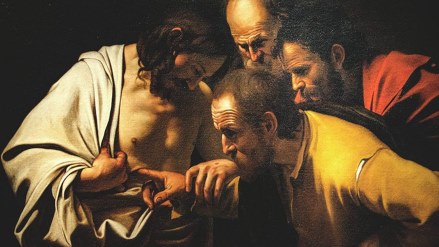
In it, we see Thomas, one of Jesus’ disciples, who struggles to believe that Christ has risen. He doesn’t just ask questions—he needs proof. He reaches out and touches the wound. It’s a very human moment. He doubts, and yet, he is not rejected for that doubt. Instead, the painting suggests that questioning can lead to a deeper understanding.
This idea, that doubt is not something to fear appears in poetry as well. In Love (III) George Herbert writes about someone who feels uncertain and unworthy and yet is still welcomed:
Love bade me welcome. Yet my soul drew back
Guilty of dust and sin.
But quick-eyed Love, observing me grow slack
From my first entrance in,
The speaker hesitates unsure full of doubt but instead of being turned away, they are gently invited to stay,
Drew nearer to me, sweetly questioning,
If I lacked any thing.
It is a powerful reminder that uncertainty does not separate us – it can actually bring us closer to understanding.
We are often taught that being confident and certain is a good thing. And in many situations, it is, but the passage and the painting challenge us to think differently. It suggests that when we become too certain, when we believe we are completely right and others must be wrong then we can stop listening. We can stop learning, and sometimes, we can become divided from others. Have you ever had an argument where both sides were completely sure they were right? Did this situation lead to better understanding or just more disagreement? ‘Certainty’ can close doors, but doubt, questions, curiosity, openness, can open them.
The opening passage reminds us that doubt is not something to be afraid of as doubt means you are thinking deeply. You are questioning and you are trying to understand the world and others, better. In school, this is exactly what learning is about. If we never doubted or questioned anything, we would not grow. Even in friendships, asking questions and trying to understand someone else’s point of view helps build stronger relationships.
Another idea here is that certainty can be the enemy of unity. Unity doesn’t come from everyone thinking the same thing. It comes from people respecting each other, even when they think differently. Tolerance means listening without immediately judging, accepting that others may see things differently, and being willing to say, “I might not be right.”
In a school community like ours, this is especially important. We all come from different backgrounds, have different ideas, and different beliefs. Diversity is a strength but only if we treat each other with respect. Last term concluded with Culture Day, a day full of joy and respect and I challenged the students to ensure that we carry this show of unity in our relationships and work, every day and not just one special day of the year.
I ended my assembly with another painting, The Persistence of Memory by Salvador Dalí who presents a dreamlike landscape where familiar objects, most notably the melting clocks, lose their usual meaning and structure.
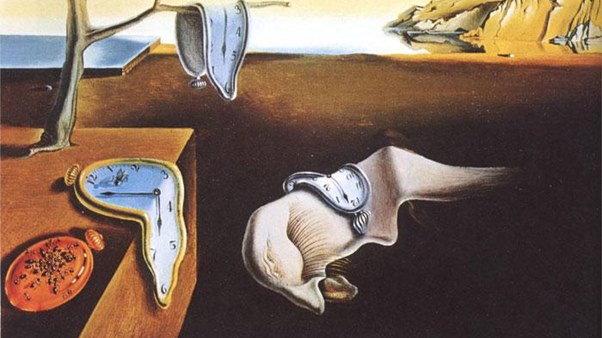
This distortion challenges the idea that time is fixed and reliable, instead suggesting it is flexible and shaped by perception. The stillness of the scene, contrasted with the strange, almost decaying forms, creates a sense of unease that reflects human doubt about reality and control. Yet within this uncertainty, the painting can also be read as quietly hopeful: if time and structure are not absolute, then fear and doubt are not permanent either. Through dissolving rigid boundaries, Dalí implies that what feels overwhelming or certain can shift, encouraging the viewer to question their limitations and recognize that even deeply rooted anxieties can be transformed.
Consequently, this Summer Term, I would like to set a small challenge to our community: be curious instead of certain, ask questions instead of making assumptions, and listen more than you speak in disagreements. Perhaps most importantly, to be comfortable saying, “I’m not sure and I would like to understand more.” If there were no questions, no uncertainty, no mystery, there would be nothing to explore, nothing to discover, and no reason to learn.